Tequila uses only blue Weber agave and steam cooking. Mezcal uses one of 30+ agave species and pit roasting for a smoky flavor. Learn when to choose each spirit and how they’re made.
You’re at a restaurant and order a Coke. The waiter asks, “Is Pepsi okay?” You shrug and say sure, because they’re both colas and the difference is mostly preference.
Now imagine ordering tequila and the bartender asks, “Is Mezcal okay?” If you say yes without understanding the difference between tequila and mezcal, then you’re about to be shocked by a completely different drink. This isn’t the Coke vs. Pepsi situation. This is more like ordering a ginger ale and getting ginger beer instead.
Here’s the straight answer: Tequila is made exclusively from blue Weber agave, while mezcal can use 30+ different agave species and the pit is roasted underground for that smoky flavor. Both spirits are exploding in the US right now, with tequila pushing past 31.5 million cases sold in 2023 with a 6% YoY growth and the mezcal market hitting $570 million in 2024 and projections of 12% yearly growth through 2034.
This guide will show you what makes tequila so different from mezcal and when you should reach for each bottle. You’ll learn why mezcal tastes smoky, why tequila doesn’t, and how to tell them apart when you’re tasting blind.
Mezcal is a distilled spirit made from cooked agave plants, produced across nine Mexican states using over 30 different agave species. The word “mezcal” comes from the Nahuatl term that means “cooked agave,” which is exactly what makes this spirit special. While tequila gets all the mainstream attention, mezcal shows the wilder side of agave spirits where the smoky terroir really shines.
That smoky flavor is the reason why the US has fallen hard for mezcal, accounting for nearly 70% of Mexico’s mezcal exports. Mezcal exports jumped by around 40% in 2022 alone, so this is a spirit that’s massively growing in popularity in the US and around the world.
What makes mezcal so fascinating compared to tequila is that mezcal makers can choose from over 30 agave species to make the spirit, while tequila makers must stick with blue Weber agave exclusively. Espadín dominates commercial production at about 86% of all mezcal because it matures faster and produces reliable yields, but you’ll also find bottles made from Tobalá, Tepeztate, Arroqueño, Mexicano, and dozens of wild varieties that take 15 to 30 years to reach harvest maturity.
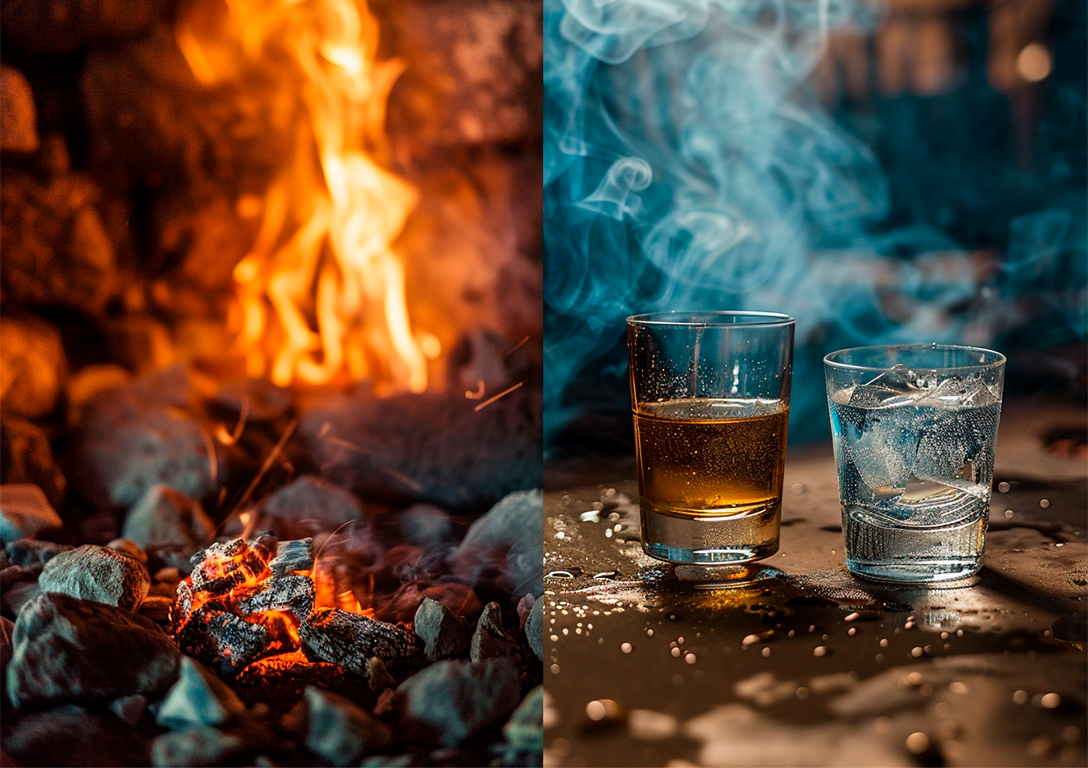
The real magic comes from how mezcal is made. Traditional pit roasting is what gives mezcal that signature smoky character that tequila lacks completely. Mezcaleros dig earthen pits, line them with volcanic rocks, build wood fires, then pile in agave hearts and cover everything with dirt for days. The smoke penetrates the agave as it cooks, creating those deep, earthy flavors. Almost 94% of certified mezcal in 2023 was classified as artisanal, so you can count on producers sticking to small-batch traditional methods to create truly outstanding mezcal.
This is what that traditional method looks like:
Tequila is a distilled spirit made exclusively from blue Weber agave, produced primarily in Jalisco and four other designated Mexican states. Unlike mezcal’s wild variety of 30+ agave species, tequila plays strictly by the rules. One agave plant. Five authorized regions. Zero smoky pit roasting. This specificity is what gives tequila its cleaner, brighter character that’s taken the US by storm.
Jalisco produces about 95% of all tequila, with Los Altos and the Tequila Valley creating different versions of it. Highland tequilas like León y Sol tend toward sweeter, fruitier profiles thanks to iron-rich volcanic soil and big temperature swings. Lowland tequilas lean earthier and more herbaceous.
Tequila is so popular in the US these days that it’s dethroned whiskey as the second-best-selling spirit in the US, racking up $6.5 billion in sales in 2023 compared to whiskey’s $5.3 billion. While blanco still commands about 43% of global tequila revenue, aged expressions like reposado and añejo are growing at around 9.5% per year. That’s the market getting more sophisticated as people realize high-quality tequila deserves to be sipped slowly, not taken as shots or chased with generic margarita mix.
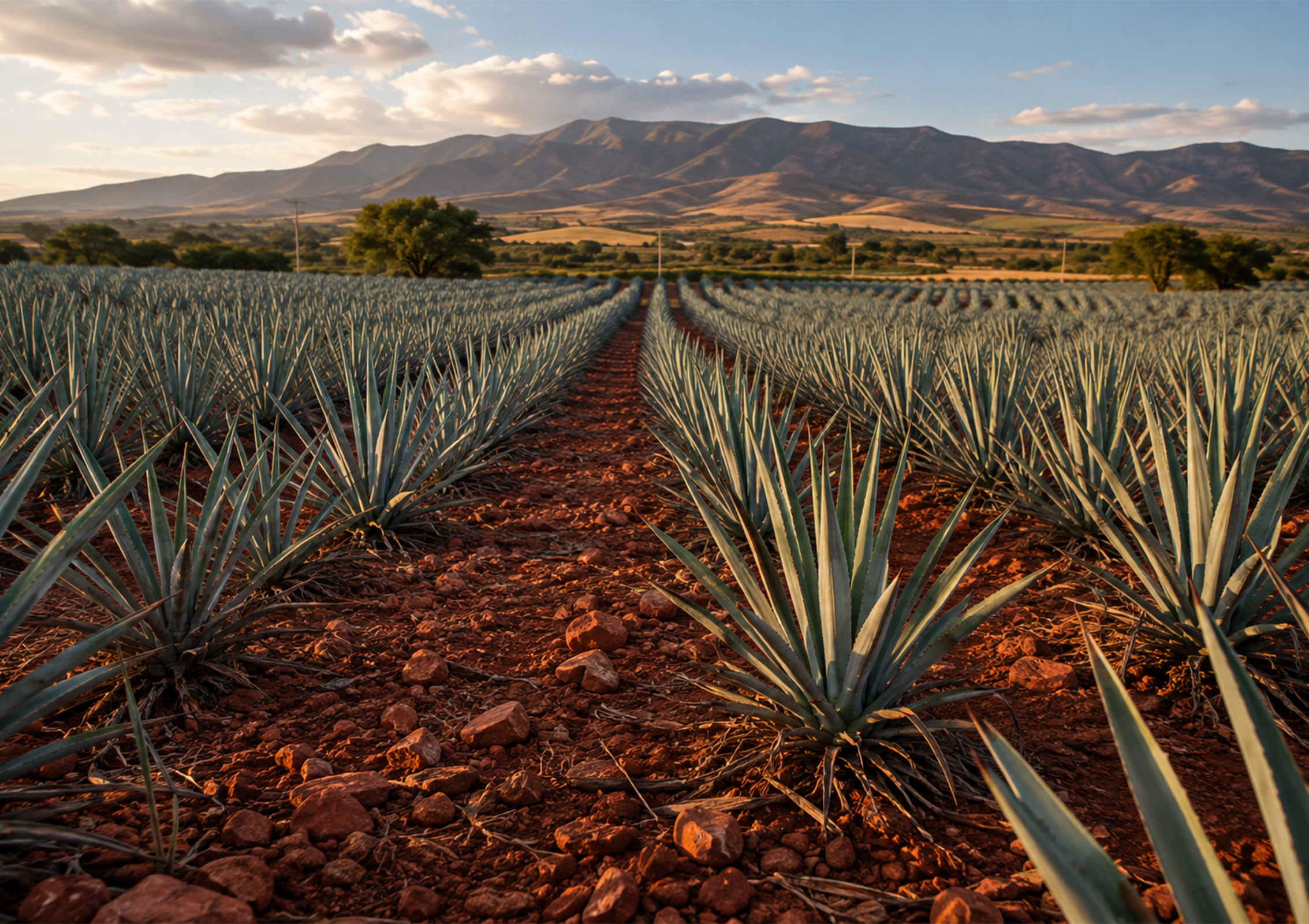
Blue Weber agave is the only game in town for tequila. This cultivated species takes six to eight years to mature in the highlands and eight to ten years in the lowlands before jimadores harvest the pits. Unlike mezcal’s agave varieties that might take decades to mature, blue Weber is specifically cultivated for its consistent sugar content and reliable production schedules.
The cooking method is where tequila diverges hard from mezcal. No smoky pit roasting here. Tequila producers steam-cook their agave in massive brick ovens or stainless steel autoclaves. This gives you all the cooked agave sweetness without any smoke character. The result is a cleaner, more agave-forward spirit that lets terroir shine through instead of masking everything with campfire.
Tequila production combines tradition with modern quality control. Here’s how tequila is made from field to bottle:
The main differences between tequila and mezcal are the agave species used, production regions, and cooking methods. Tequila must use blue Weber agave exclusively and gets steam-cooked in ovens so it can create those clean, bright flavors. Mezcal can use 30+ agave species and gets pit-roasted over wood fires, creating that signature smoky character. Both are Mexican agave spirits with protected designations of origin, but they’re about as similar as bourbon and scotch.
Here’s how tequila and mezcal compare:
No, mezcal is not a type of tequila. It’s actually the opposite. Tequila is a type of mezcal, not the other way around. All tequila is mezcal, but not all mezcal is tequila. It’s the square and rectangle situation from geometry class.
Mezcal is the broad category covering any distilled agave spirit made in designated Mexican regions following traditional methods. Tequila is the specific subcategory that must use blue Weber agave exclusively, get produced in five specific states, and follow stricter regulatory standards under Mexico’s Official Standard NOM-006-SCFI-2012. So when you drink tequila, you’re technically drinking a very specific, regulated type of mezcal that doesn’t taste smoky.
Mezcal tastes smoky because producers roast the agave in underground pits lined with volcanic rocks and heated by wood fires, while tequila producers steam-cook their agave in above-ground ovens with no smoke involved.
The mezcal production process smokes the agave for days. That smoke penetrates deep into the agave flesh, so what you’re tasting is actual wood smoke, not a flavoring agent. Tequila skips all this drama. Producers load blue Weber agave into brick ovens or stainless steel autoclaves and pump in steam for 24 to 48 hours. The cooking happens in a controlled, smoke-free environment. That’s why tequila tastes clean and bright while mezcal tastes like someone grilled your cocktail over an open fire. Both are delicious, just very different.
Choose mezcal when you want smoky complexity and bold flavors that demand attention, and choose tequila when you need versatility for cocktails or want to taste clean agave as you sip. Your choice comes down to the occasion, what you’re mixing (or not mixing), and whether you want smoke in the equation. Mezcal makes a statement. Tequila plays well with others. Both have their moments.
Mezcal works best when its smoky character can shine without getting lost or overwhelming other ingredients. Here’s when to use mezcal:
Tequila shines when versatility and clean agave flavors matter more than smoke and complexity. Here’s when to use tequila:
You can substitute mezcal for tequila in cocktails, but it will completely transform the drink by adding a smoky depth that might overpower delicate flavors. The substitution works best in spirit-forward cocktails where smoke enhances rather than dominates.
Here’s how mezcal substitution plays out in common tequila drinks:
How León y Sol Produces Tequila
León y Sol sources 100% blue Weber agave exclusively from Los Altos de Jalisco, where the highlands deliver what lowland tequila never could. Cold nights stress the agave plants into survival mode, forcing them to pump out extra natural sugars. Then, the scorching hot days help them grow faster. And that temperature roller coaster creates agave with inherent sweetness and complexity before we ever touch a barrel.
Tequila and mezcal are both quintessentially Mexican spirits, they just had a different path into this world. Tequila brings a clean, versatile agave character that’s perfect for margaritas or just sipping. Mezcal comes with a smoky attitude that demands attention and rewards patience. Neither is better. They’re different tools for different moments.
Start with tequila if you want something approachable that works in classic cocktails and casual settings. León y Sol’s highland expression shows you what Los Altos terroir creates when volcanic soil and traditional methods come together. Then, explore mezcal when you’re ready for smoke and adventure. Both deserve a spot on your shelf.
No, mezcal and tequila usually have similar alcohol content, both bottled around 38% to 55% ABV depending on the expression. Mezcal tastes stronger because its smoky flavors hit your palate harder than tequila’s cleaner profile.
Mezcal costs more because of small-batch artisanal production, longer agave maturation times, and labor-intensive pit roasting. Tequila benefits from industrial-scale efficiency and cultivated blue Weber agave that matures in six to ten years, which lowers production costs.
Yes! A margarita made with mezcal is known as a mezcalita and tastes much stronger due to the smokiness. While a margarita might be the ideal poolside drink, a mezcalita is much better suited for nighttime drinking.
Mezcal tastes smoky, earthy, and complex with flavors that can go from roasted peppers to tropical fruit depending on the agave species. Tequila tastes clean and agave-forward with citrus and fruity notes. The smoke is the dead giveaway. If it tastes like a campfire, it’s mezcal.
Yes, all tequila is technically mezcal since mezcal is the broad category for distilled agave spirits. However, not all mezcal is tequila. Tequila is a specific regulated subcategory that must use blue Weber agave exclusively and get produced in designated regions.