Discover what tequila is, what plant it’s made from, and how production methods create different types. Learn to identify quality tequila and why it matters.
You’re at a bar scanning the top shelf when the bartender asks what you want. “Tequila,” you say confidently. He pulls down three bottles and asks which one. Blanco? Reposado? Añejo? You realize you have absolutely no idea what any of those words mean or why one costs $40 and another $120. That’s the situation most people are in, as they know that tequila comes from Mexico but not much about what tequila really is.
Tequila is a distilled spirit made exclusively from blue Weber agave in five designated Mexican states, but most of it is produced in Jalisco. This guide breaks down what plant tequila comes from, how producers turn agave into spirits, what makes each tequila type special, and how to tell quality tequila from garbage.
Tequila is a distilled spirit made exclusively from blue Weber agave in designated regions of Mexico. It’s governed by strict regulations to protect its authenticity and the taste millions of people enjoy. Unlike other spirits that can be produced anywhere with any base ingredient, tequila must meet specific legal requirements enforced by the Mexican government. You can’t distill agave in California and call it tequila any more than you can make sparkling wine in Texas and call it Champagne.
Tequila can be produced in five Mexican states, with Jalisco absolutely dominating at roughly 95% of total production. The other four states authorized to produce tequila are Guanajuato, Michoacán, Nayarit, and Tamaulipas, but they produce tiny amounts in comparison. With Jalisco, you’ll find two main terroirs that create distinctly different tequilas: Los Altos (the highlands) and El Valle (the valley). Los Altos produces sweeter, fruitier expressions like León y Sol. El Valle creates earthier, more herbaceous spirits.
Mexican regulation NOM-006-SCFI-2012 defines everything about tequila production and is enforced by the Consejo Regulador del Tequila (CRT). This regulatory body tests every batch and keeps samples from every production run.
The biggest difference in regulations to note is that quality tequila uses only blue Weber agave sugars, while mixto (mixed) can contain up to 49% sugars from other sources like cane sugar or corn syrup. The market has spoken on this, too, as Mexico produced 427 million liters of pure agave tequila in 2023 compared to just 171 million liters of mixto. That’s a 71% share for 100% agave.
Tequila gets its name from the town of Tequila in Jalisco, where production centered in the 1600s after Spanish conquistadors introduced distillation techniques to indigenous agave fermentation traditions. The spirit gained official appellation of origin status in 1974, legally protecting the name as exclusively Mexican. That means when you buy a bottle that says tequila, you’re getting an authentic Mexican spirit made under strict standards.
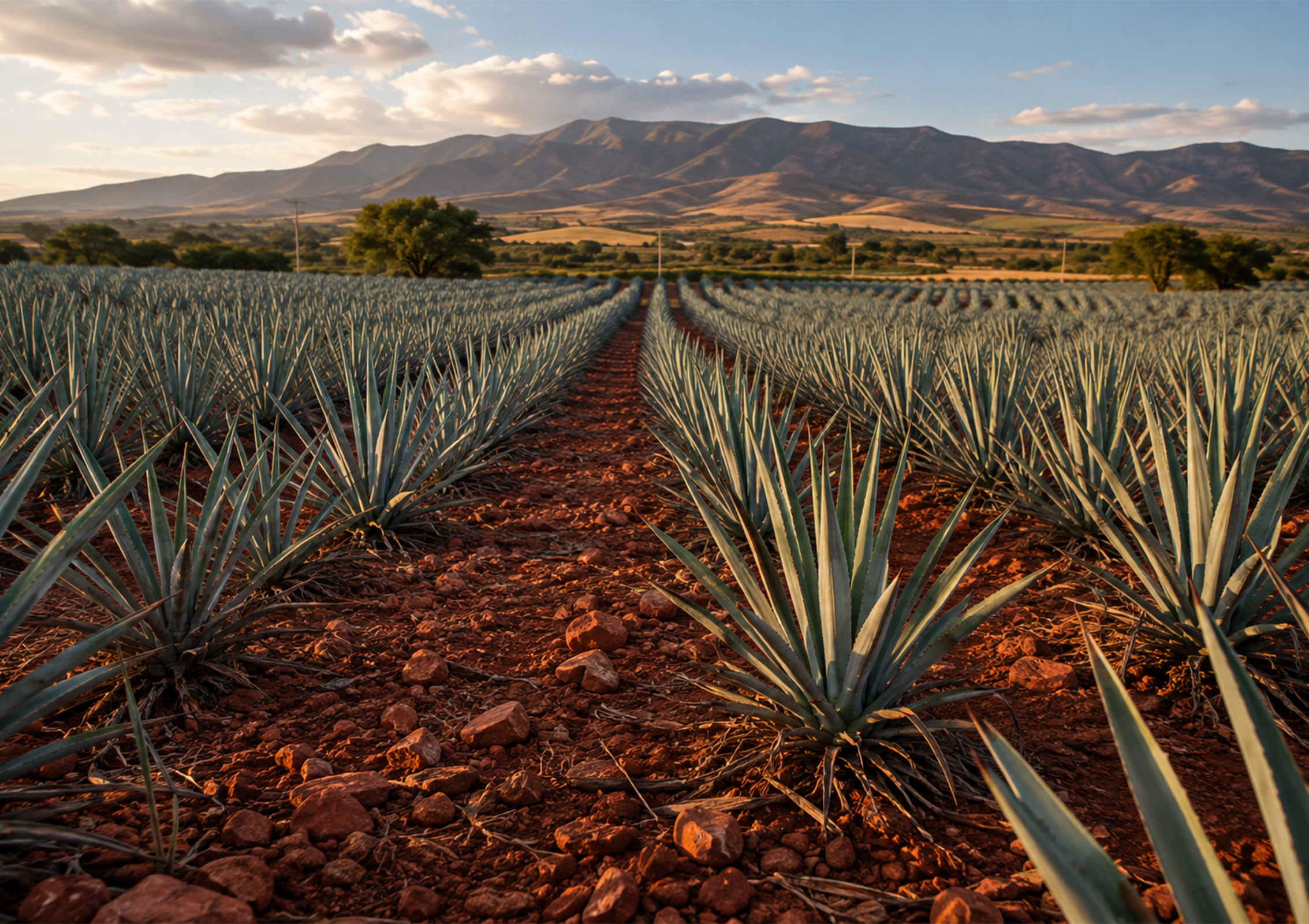
Tequila is made from blue Weber agave, the only agave species legally allowed for tequila production. Over 200 agave species grow across Mexico, but only blue Weber makes the cut for tequila. This plant delivers consistent sugar content, reliable fermentation, and that signature agave flavor profile that makes tequila taste like tequila. The Mexican government takes this so seriously that using any other agave species will prevent you from legally calling your drink tequila, even if it’s distilled the exact same way.
Blue Weber agave is a succulent that grows into massive plants specifically cultivated for tequila production. The dedication to this single variety shows in the numbers. Mexico currently has almost 109,000 hectares planted with blue Weber, representing about 84% of the country’s total agave crop. That’s a lot of real estate committed to one plant.
Here’s what makes blue Weber the chosen one:
Highland blue Weber agave grows in Los Altos de Jalisco, where iron-rich volcanic soil and wild temperature swings create natural stress on the plants. Cold nights and scorching days force the agave to produce extra sugars as a survival response. The result is a sweeter, fruitier agave that makes tequila with pronounced floral and citrus notes. León y Sol sources exclusively from Los Altos because this highland character shines through even after it’s been aged in oak barrels.
Lowland blue Weber agave grows in the Valle around the town of Tequila, where soil composition is very different and the temperature is more stable. These plants don’t experience the same temperature stress, so they develop differently. Lowland agave creates earthier, more herbaceous tequilas with peppery and vegetal notes. Neither is better. They’re just different expressions of the same plant responding to different terroir.
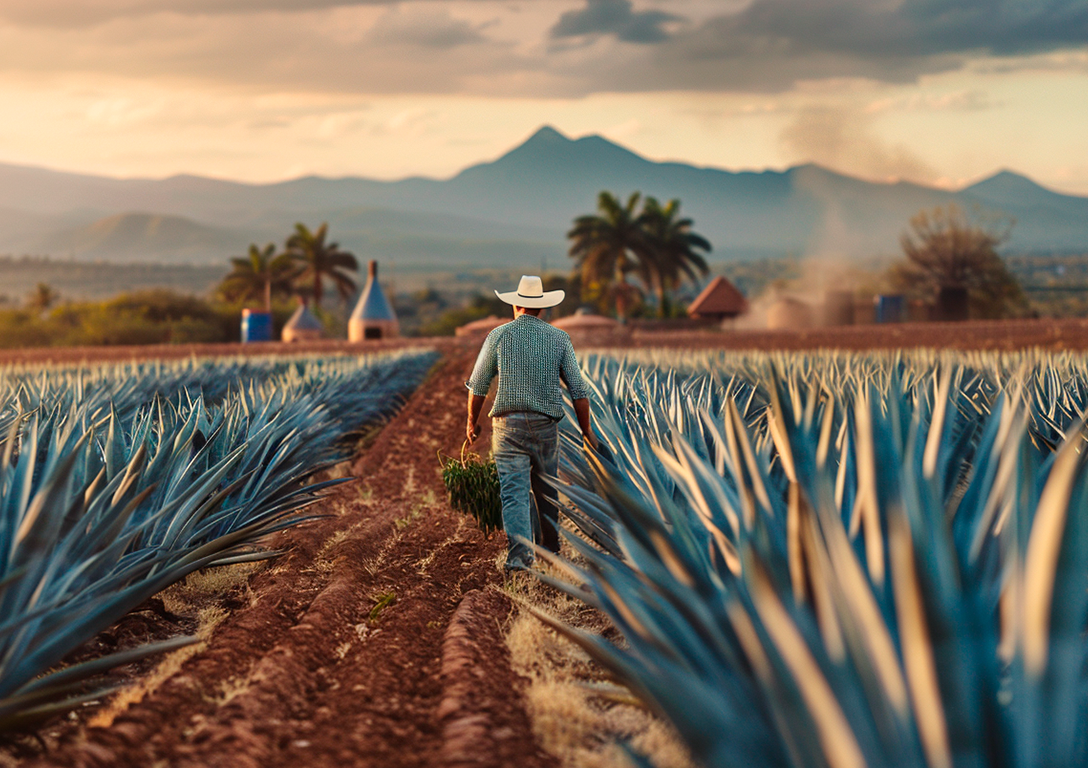
Jimadores are the skilled field workers who harvest the blue Weber agave using techniques passed down through generations. They wield a coa, which is a razor-sharp circular blade attached to a long wooden handle, to slice off the spiky leaves and extract the piña in one smooth operation.
Watching a master jimador work is like watching a surgeon. They know exactly when an agave plant hits peak maturity by reading visual cues most people wouldn’t know about. Leaf color, plant size, and the way the pencas curve. Experience tells them which plants are ready and which need another season.
Tequila is made by following traditional methods refined with modern quality control. Every step from harvest to bottle affects the final flavor, which is why master distillers obsess over timing, temperature, and technique.
Here’s how blue Weber agave is made into tequila:
The basic steps haven’t changed in centuries. Harvest agave, cook it, extract the juice, ferment, distill twice, and bottle or age. The expertise of jimadores is still irreplaceable. No machine can read an agave field like someone who learned the skill from their grandfather.
What’s modernized is efficiency and consistency. Autoclaves cook agave faster and more evenly than brick ovens. Roller mills extract more sugar than tahonas. Stainless steel fermentation tanks give distillers precise temperature control that wooden vats can’t match. Quality testing happens at every stage now, with 170 certified NOM distilleries producing over 2,100 registered tequila brands under strict CRT oversight.
Both approaches matter. Traditional methods preserve the flavor profiles that made tequila famous. Modern techniques confirm that every bottle meets safety standards and tastes consistent batch to batch. The best distilleries blend both. That’s how Mexico was able to produce 496 million liters of quality tequila in 2024, by embracing tradition but speeding up the process with tech.
Tequila categories are defined by time spent in oak barrels. Aging changes everything about the spirit: color, flavor, smoothness, price, and what you should do with it. All types can be 100% agave or mixto, but always choose 100% agave. Your palate will thank you.
These are the biggest differences between the most popular types of tequila:
Blanco is the foundation of everything. This is pure agave expression with zero oak influence, showing you exactly what the distiller can do with blue Weber agave and some terroir. Blanco currently holds around 43% of the global tequila market because it’s what all alleged tequilas start as and it’s perfect for cocktails. Every reposado, añejo, and extra añejo begins as blanco before seeing the inside of a barrel.
Aged tequilas generally cost more because time literally costs money. Reposado and añejo use up warehouse space and lose liquid to evaporation (the angel’s share). Reposado tequila is exploding right now, projected to grow at almost 9.5% per year through 2030 as drinkers discover its sweet spot between agave and oak. The premium tier is growing at 6% while the super-premium tier actually declines, showing that people want quality without breaking the bank.
Tequila can only be produced in five Mexican states, though Jalisco produces about 95% of all tequila. The other four states authorized to produce tequila are:
Tequila might be the most heavily regulated spirit on the planet. Every bottle must carry a NOM number, which identifies exactly which distillery produced it. The Mexican government assigns these numbers to certified facilities that meet strict production standards.
As of 2024, there are 170 NOM distilleries producing over 2,100 registered brands. Some distilleries make just one brand. Others crank out nearly 300 different labels. The NOM number tells you who made what’s in the bottle, which matters when different brands from the same distillery taste suspiciously similar.
The CRT enforces all tequila regulations and monitors every stage of production. They test every single batch before it can be bottled and sold. The CRT keeps samples from each production run, creating a massive archive that tracks quality over time. This verifies that what’s labeled as tequila actually meets the legal standards to be called so. Denomination of origin protection means that only spirits made in authorized Mexican regions using blue Weber agave can use the word tequila.
For consumers, these regulations are your protection from garbage products. Look for two things on a bottle: a NOM number and the words “100% agave.” If you don’t see both, you’re buying mixto or worse. Regulations protect traditional production methods too, preventing shortcuts like using diffusers to chemically extract agave or adding artificial flavors. When you buy real tequila, you’re getting a spirit made the right way under tons of scrutiny.
León y Sol sources 100% blue Weber agave exclusively from Los Altos de Jalisco. And we chose the highlands for a reason. That iron-rich volcanic soil and those brutal temperature changes stress the agave into producing extra natural sugars that show up in every bottle. We work directly with jimadores and agave farmers who’ve cultivated these fields for generations. These relationships are incredibly important because they guarantee that we get mature agave harvested at peak ripeness, not whatever’s cheapest that week.
Our production stays rooted in traditional methods. We steam-cook our agave in brick ovens. No diffusers, no chemical extraction that strips flavor for efficiency. For aging, we split our reposado between American and French oak barrels for four months. American oak brings vanilla and caramel sweetness while French oak adds subtle spice and tannin structure.
Old but gold. That’s our philosophy. We care more about quality than volume. Highland terroir comes through even after barrel aging, delivering that fruity complexity Los Altos is known for. We never add artificial colors or flavors to our tequila. One hundred percent agave, every time.
Tequila isn’t the only agave spirit Mexico produces, but it’s the most regulated and widely recognized internationally. While mezcal, raicilla, and other spirits explore the wild diversity of agave and desert plants, tequila sticks to one variety under strict oversight. This is what tequila’s cousins are like:
Tequila’s strict regulations and single-agave requirement make it the most consistent agave spirit. You know exactly what you’re getting when you crack open a bottle of tequila, which you absolutely cannot say about mezcal or any other spirit where production methods and agave varieties vary wildly.
Tequila is way more complex than most people realize. Blue Weber agave, highland versus lowland terroir, steam cooking versus pit roasting, aging, and the list goes on. All of these completely change tequila’s flavor. All of this matters when you’re holding a bottle and deciding what to buy. Quality tequila deserves to be sipped slowly, not taken as a shot with salt and lime with reflexes left over from college.
Start with 100% agave to taste real tequila first. Then, try different types to figure out what you actually like. Blanco for cocktails. Reposado for versatility. Añejo for slow sipping. Explore León y Sol’s highland tequila to experience what Los Altos terroir can create when volcanic soil and temperature extremes come together in a bottle.
It takes six to ten years total to make tequila. Blue Weber agave needs six to eight years to mature in the highlands, then production from harvest to bottle takes anywhere from a few days to a few weeks depending on aging category.
100% agave tequila uses only blue Weber agave sugars. Mixto uses a minimum of 51% agave plus up to 49% other sugars like cane or corn syrup. 100% agave always tastes better and causes fewer hangovers.
Tequila has denomination of origin protection like Champagne. The Mexican government owns exclusive rights to the word tequila and restricts production to five authorized states.
One mature blue Weber agave typically yields three to five bottles of tequila, depending on the size of the piña and production efficiency.
NOM (Norma Oficial Meixcana) is the distillery identification number assigned by the Mexican government. All legal tequila must display a NOM number showing exactly which certified facility produced it.
No. Only blue Weber agave is legally allowed for tequila production. The 200+ other agave species make mezcal or other agave spirits.
Tequila is made from blue Weber agave, a succulent that takes six to ten years to mature. This is the only agave species legally allowed for tequila under Mexican regulations.
Not necessarily, but price often reflects quality ingredients and aging time. You’re paying for mature agave, careful distillation, barrel aging, and brand reputation.