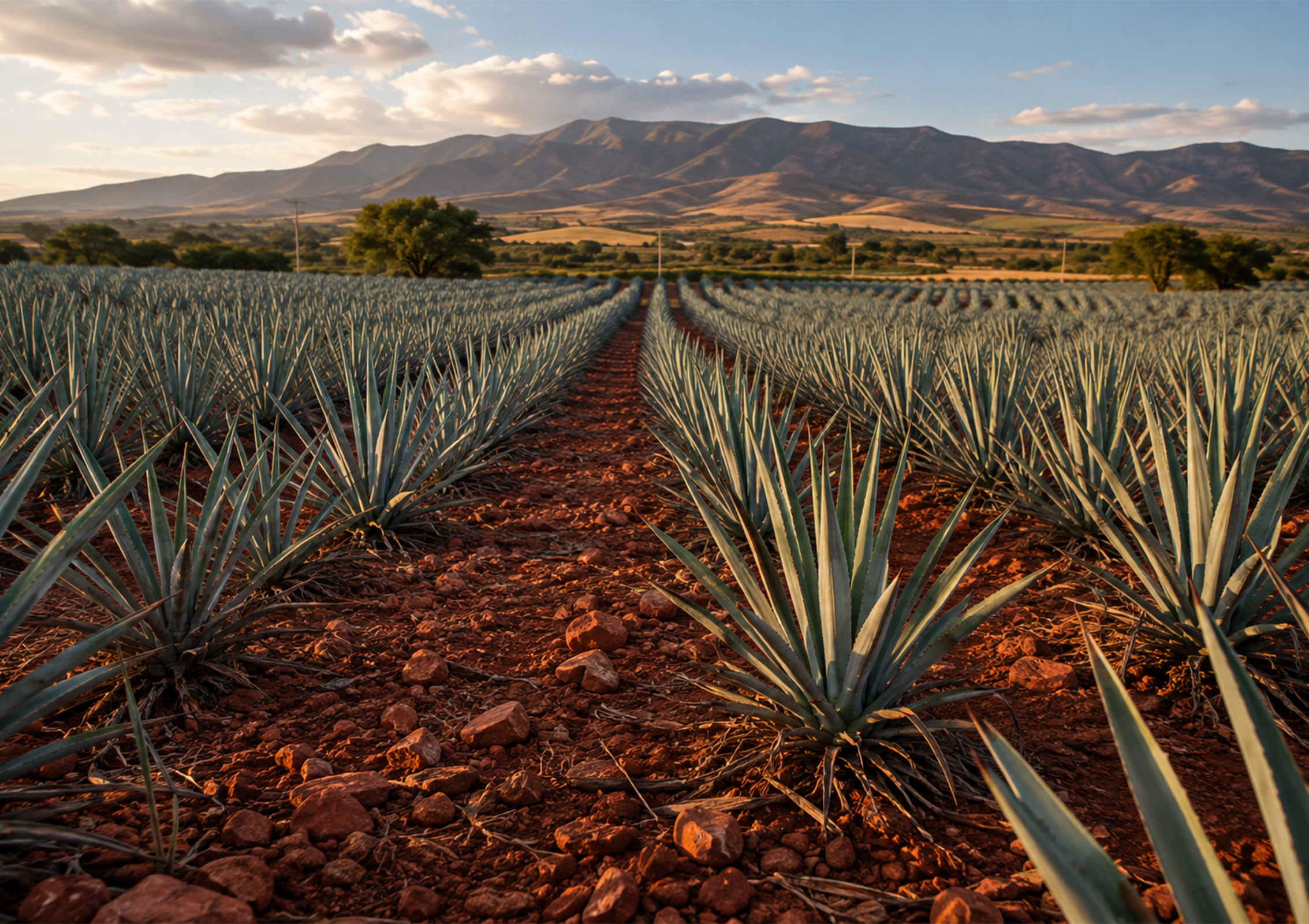
Learn how tequila is made from agave harvest to barrel aging. Covers cultivation, cooking, fermentation, distillation, and why production takes 6–10 years

Most people know tequila comes from Mexico. Most have no idea what really goes into making it.
Tequila is made exclusively from blue Weber agave in five designated Mexican states, with production concentrated heavily in Jalisco. The complete timeline from planting to bottled tequila takes 6–10 years,w ith most of that waiting for agave to mature before production even starts.
This guide walks you through the entire tequila production process, showing you exactly how blue Weber agave becomes the spirit that’s now the second-most popular spirit in the United States.
Tequila comes from blue Weber agave and only blue Weber agave. Not any of the other 200+ agave species growing in Mexico. Just this one. Mexican law doesn’t give producers any options here, as only tequila made from blue Weber agave can be called tequila even if the rest of the process is identical.
That’s the legal definition enforced by the Consejo Regulador del Tequila. Every bottle labeled tequila started with blue Weber agave harvested from designated Mexican regions. No exceptions, no substitutions, no creative interpretations.
Blue Weber agave isn’t a fast-growing crop you can harvest every year like corn or wheat. This succulent demands patience and land that’ll stay empty for years before producing anything worth distilling.
Here’s what blue Weber agave requires before it’s ready to be turned into tequila:
Where blue Weber agave grows determines what your tequila tastes like. Los Altos (highland) and Valle (lowland) produce the same species but create wildly different species:
León Y Sol sources exclusively from Los Altos because highland terroir creates the naturally sweeter, more complex agave that shows through even after barrel aging.
Tequila can only be made in Mexico. The Mexican government granted tequila Denomination of Origin status in 1974, legally protecting the name the same way France protects Champagne or Scotland protects Scotch. Produce agave spirits anywhere else and you can’t call it tequila, even if you use blue Weber agave and follow the same production methods.
The Denomination of Origin covers five Mexican states, though production concentrates heavily in Jalisco. In 2024, the tequila industry required 1.8 millions of agave and employed 42,441 registered producers in these authorized regions. Jalisco dominates completely, producing roughly 95% of all tequila. The other four states combined barely make a dent in total production.
These are the five states legally authorized to produce tequila:
Tequila evolved over centuries from fermented agave drinks the Aztecs considered sacred to the distilled, regulated Mexican export that now outsells whiskey in the United States. It all changed when the Spanish conquistadors brought distillation, and, centuries later, Mexican entrepreneurs built commercial empires.
The Aztecs were fermenting agave into pulque centuries before anyone thought to distill it. They’d extract aguamiel (honey water) from mature maguey plants, collect it in clay pots, and let natural yeasts work for several days. The result was frothy, milky, sweet, and mildly alcoholic.
But far from drinking it just to enjoy themselves, the Aztecs believed pulque was sacred. The goddess Mayahuel represented the maguey plant itself. Her husband, Patecatl, presided over the fermented drink. The Aztecs believed pulque possessed healing properties and used it in ceremonies and religious offerings.
Strict rules governed who could drink it and when. This reverence for fermented agave was the starting point for production methods that would emerge once distillation arrived from Europe.
Spanish conquistadors showed up in the 1500s with distillation knowledge and copper skills. They ran low on imported brandy, needed alcohol, and started experimenting with what locals had been fermenting for centuries. European distillation techniques met indigenous agave fermentation practices to create the earliest versions of what would split into mezcal and tequila.
The Marquis of Altamira built the first large-scale distillery in the 17th century in what’s now Tequila, Jalisco. What started as small-batch production had to quickly grow into commercial operations that could meet demand.
The town became famous for a specific version made exclusively from blue Weber agave that thrived in Jalisco’s volcanic soil in the highlands. People started calling it tequila after the town, which separated it from other agave spirits produced elsewhere in Mexico, and the rest is history.
Entrepreneurial families saw tequila’s commercial potential and built the industry around it. Here’s how tequila went from regional specialty to global export:
Making tequila hasn’t changed much since the 1600s. Harvest agave, cook it, crush it, ferment the juice, distill twice, then age or bottle. The basics stayed the same. What’s different now is quality control and the ability to produce thousands of bottles without sacrificing what makes good tequila worth drinking.
The timeline from planting agave to finished bottle takes 7–10 years, with most of that waiting for plants to mature before production even starts. You can’t rush blue Weber agave. It takes the time it takes, which is why tequila costs what it does and why shortcuts always taste like shortcuts.
Every bottle of tequila starts in a field, not a distillery. Blue Weber agave spends years growing in volcanic soil before jimadores decide it’s ready. Here’s how that works:
Watching a master jimador do their work looks surgical. They know exactly when agave hits peak maturity by reading signs most people wouldn’t notice. Harvest too early and you get less sugar and thinner flavor. Wait too long and bitterness creeps in. No amount of technology can replace that kind of experience.
Cooking converts agave’s complex carbs into fermentable sugars while developing the flavors that make tequila taste like tequila. The method you choose determines whether you’re getting caramelized complexity or industrial efficiency:
Heat breaks down insulin stored in agave into fructose and glucose that yeast can ferment. Traditional brick ovens do this slowly, allowing time for reactions that create caramel and roasted flavors. Autoclaves speed everything up with pressurized steam to preserve brighter notes, but they do miss some depth. Diffusers shred raw agave and chemically extract sugars without proper cooking. That produces the blandest results.
Cooked agave needs to get crushed so you can separate the sweet juice from the fibrous plant material. Two methods dominate, and your choice affects flavor more than you’d think:
Both processes extract aguamiel, the sweet agave juice that becomes the fermentation base. Traditional producers value tahona for character, while modern operations prefer mills for efficiency. Neither’s inherently better. They just create different results.
Fermentation turns sweet aguamiel into alcoholic mosto. Yeast consumes sugars and produces ethanol and carbon dioxide. How you ferment determines how much terroir and complexity makes it into your glass:
Open-air fermentation in wooden or stainless vats lets wild yeasts from the environment join cultivated strains. It adds complexity and terroir you can’t replicate in a lab, although results vary batch to batch.
Closed fermentation in temperature-controlled tanks using only cultivated yeast creates consistency but sacrifices some character. Fermenting with agave fibers adds earthy richness but needs to be managed carefully to avoid off-flavors.
What you get at the end is mosto. This is low-alcohol liquid at 5–7% ABV that smells sweet and yeasty. Basically agave beer before distillation concentrates everything into actual tequila.
Distillation happens twice minimum, sometimes three. Heat separates alcohol from water and concentrates flavors while removing compounds you don’t want. The standard tequila distillation process looks like this:
The equipment you distill in matters just as much as how many times you run it through. Different skills create different results even when using identical agave and fermentation methods. Copper and stainless steel each bring something to the table, and choosing between them is about what flavor profile you’re chasing:
After distillation, tequila either goes straight into bottles as blanco or into oak barrels for aging. Time in wood turns clear spirit into golden reposado or deep añejo by putting vanilla, caramel, and tannins from charred oak. This is how aging affects tequila:
Barrel selection changes everything. American oak (usually ex-bourbon) brings vanilla and caramel. French oak adds spice and tannin. Barrel size affects aging speed since smaller barrels create more wood contact. Premium producers use 200-liter barrels for intense flavor. Mass producers use 20,000-liter tanks for gentler, slower aging.
León Y Sol ages reposado for four months split between American and French oak. Vanilla and caramel from one, spice and structure from the other. That’s where oak enhances highland agave without trying to bury it.
Tequila just might be the most heavily regulated spirit on the planet. Mexican law controls where it’s made, how it’s made, what goes in the bottle, and who gets to call their product tequila in the first place. The Consejo Regulador del Tequila enforces everything with testing, sampling, and strict oversight that keeps the industry honest.
There are multiple layers of regulation that protect tequila’s authenticity and quality. Here’s what governs production:
The CRT recently started offering an “additive-free” certification for producers who want to prove they’re using zero additives instead of just staying under the 1% limit. It’s voluntary and still in early stages, but it’s gaining traction with premium brands marketing transparency.
León Y Sol sources 100% blue Weber agave exclusively from Los Altos de Jalisco because highland terroir creates naturally sweeter agave that shows through even after barrel aging. Every production decision prioritizes quality over efficiency.
Here’s how we make tequila:
Tequila production takes 6–10 years before harvest even starts, then months or years more for aging. Traditional methods can’t be rushed. Shortcuts always taste like shortcuts. That’s why quality costs what it does and why the time investment matters in every pour.
Experience what Los Altos highland tequila tastes like when made right. Shop León Y Sol.
Tequila is made from blue Weber agave exclusively. Mexican law prohibits using any of the other 200+ agave species. Blue Weber takes 6–10 years to mature and contains the sugar content and flavor profile required for premium tequila production under strict regulations.
Tequila can only be made in five Mexican states:
Jalisco produces roughly 95% of all tequila, though you’ll also find some small-batch distilleries making tequila in the four other states.
It takes between six and 10 years to make tequila from scratch. Blue Weber agave needs 6–8 years to mature in the highlands or 8–10 years in the lowlands. After harvest, production takes a few weeks for blanco or years for reposado and añejo.
Nobody invented tequila in one moment. The Aztecs fermented agave into pulque for centuries, then the Spanish conquistadors introduced distillation processes in the 1500s. The Marquis of Altamira built the first large-scale distillery around 1600 in Tequila, Jalisco, creating what we recognize today.
Tequila is distilled twice minimum. The first distillation produces ordinario at 20–25% ABV. The second distillation refines it to 35–55% ABV. Some producers add a third distillation for extra smoothness, though this could strip some of the agave’s character.
Tequila has Denomination of Origin protection, granted by the Mexican government in 1974. Like Champagne or Scotch, the name is legally tied to one specific geography. Only five Mexican states can produce it. If it’s not produced in any of those states, then the bottles have to be labeled “agave liquor” or another generic name.