Blue Weber agave takes six to ten years to grow. Learn how jimadores decide when to harvest and why patient producers pay more for every bottle.

If you care enough about tequila to look up the NOM number on a bottle, you already know the agave shapes most of what ends up in your glass. Few people ever see the field itself, though, where a single plant spends most of a decade before anyone decides it's ready.
Blue Weber agave needs six to ten years to reach harvest. Producers who let it go the full stretch start with sweeter piñas, the hearts of the plant, while every grower rides out price swings that can last a decade.
This guide covers how long it takes to grow agave for tequila and how jimadores, the workers who harvest it by hand, decide when a plant is ready. You'll also see why traditional producers can't make good tequila cheaper, even when agave prices collapse.
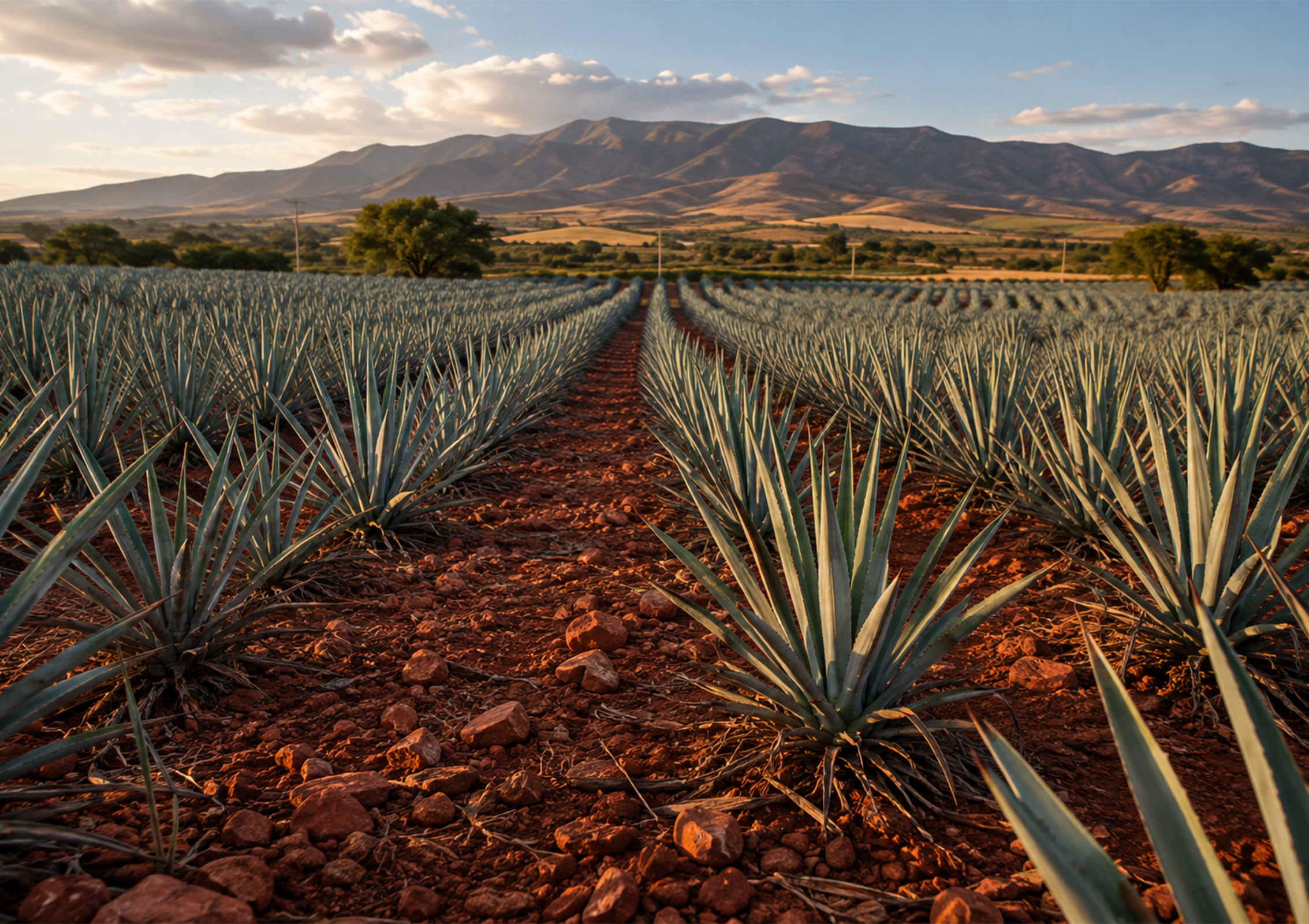
Blue Weber agave takes six to ten years to grow from a planted offshoot into a plant ready for harvest. Most producers who care about quality wait at least seven years, though some leave their plants in the ground for close to a decade.
By farming standards, that’s an absurdly long wait. A grower who plants agave this fall won’t see it in a bottle until sometime around 2033. Agave can technically become tequila sooner than that, though. A 2021 study harvested plants as young as four years old and found that tequila from every batch still passed Mexico’s official quality standards.
These younger plants still cost the distiller something, though. They went into the oven carrying less sugar, so each kilo of agave produced less alcohol and a different mix of the aroma compounds that give tequila its flavor.
Sugar content in blue agave ranges from roughly 16 to 28 percent, with plants harvested at four or five years landing around 20 percent. Craft producers wait the extra year or two for that number to go up, since a sweeter plant gives the yeast more to turn into alcohol, plus more of the caramelized cooked agave flavor you taste in a good blanco.
Where the plant grows also affects how long it takes for it to mature. Elevation and nighttime temperatures both change how quickly agave creates sugar, which is part of why tequila from Jalisco’s two main growing regions tastes so different depending on where it came from.
In general, the longer the plant grows, the better suited it is for making tequila. That’s why you’ll learn a lot about a distillery from how long it’s willing to wait.
Every blue Weber field starts with hijuelos, which are the small shoots that sprout from the base of a mature agave. Growers dig them up and replant them in rows, so each new plant starts life as a genetic copy of its mother.
Growers get uniform fields this way, though they also end up with a crop that has very little genetic variety. UNAM researcher Rodrigo Medellín estimates that roughly 270 million agave plants in Jalisco descend from just 5 to 10 original individuals, which makes the whole crop more vulnerable to disease.
A 2022 genomic study found more variation inside cultivated fields than that estimate suggests. Even so, commercial blue Weber carries about 73 percent less genetic diversity than wild agave populations.
For the first few years, most of the plant’s growth goes into the leaves. Those thick, spiky leaves fan out wider every season, catching the sunlight the agave will later turn into stored sugar. A plant in its third year already looks impressive from the road, even if it’s nowhere near ready to be harvested.
The long middle stretch is where the tequila really starts, years before anyone fires up an oven. The agave stores energy in its core as fructans, which are long chains of sugar that build up slowly inside the heart of the plant. Growers call that heart the piña, since it looks like a giant pineapple once the leaves come off. It’s the only part of the agave that ever ends up in your glass.
Near the end of its life, the agave tries to reproduce by sending up a quiote, which is a tall flowering stalk shooting out of the center. Left alone, the plant pours its stored sugar into that stalk and dies once it blooms. Growers cut the quiote before it flowers so all that sugar stays in the piña.
You’re drinking a plant that spent its final years saving sugar for a flower it never got to grow.
Growers time the agave harvest by checking each plant on the outside and the inside. A trained eye can do the former, while a refractometer handles the latter by measuring the sugar on the inside.
The first check belongs to a jimador, the field worker who harvests agave by hand. Good jimadores walk the rows reading the plants the way a sailor reads the sky, spotting which ones have turned the corner long before anyone runs any tests on the plant.
These are the signs jimadores look for:
Back at the distillery, producers confirm it with an optical refractometer, which measures the dissolved sugar in a drop of agave juice as degrees Brix. They subtract about 20 percent from that reading to estimate how much fermentable sugar the plant really has.
The best producers rely on both. A jimador’s eye catches plants a single sample might miss, while the refractometer confirms what the eye already suspected.
Jimadores head into the fields around sunrise and usually finish shortly after noon, before the afternoon heat makes the work miserable. By the time most people are eating lunch, the day’s agave harvest is already loaded onto trucks.
Their main tool is the coa, which is a long wooden pole with a sharp, rounded blade at the end. A jimador uses it to slice away the leaves one at a time, working his way around the plant until only the piña is left, then cuts it free from the roots.
Experienced jimadores can trim a plant in three to six minutes, clearing more than 100 plants in a single shift. A good one can bring in more than a ton of piñas before the heat sets in. The piñas a jimador hauls out of the field weigh around 70 pounds on average once the leaves come off, with most between 20 and 220 pounds. Growers have pulled out rare giants that weigh close to 400 pounds.
Workers then haul the piñas to the distillery ovens, where seven or more years of growing finally start turning into something you can drink.
Once producers cook and crush the piñas, they ferment the sugary juice known in the industry as the must. The older the agave, the more sugar that must holds.
A 2009 study compared agave harvested at four years with agave harvested at eight. At the same Brix level, must from the younger plants held 61.5 grams of sugar per liter, against 72.5 grams from the older plants. The older agave handed the yeast about 18 percent more sugar to turn into alcohol.
Researchers in a 2021 industrial study saw the same pattern at a commercial scale. Must from younger agave produced less alcohol, along with a different mix of volatile compounds, which are the aromatic molecules that affect what you smell in a glass.
Tequila from every harvest in that study still passed Mexico’s chemical standards. The authors never ran a taste test, so neither study shows whether younger agave made worse tequila. Producers who wait still start every batch with more sugar and a different set of aromatics to work with.
A farmer who sees tequila sales jump this year can plant more agave tomorrow, though none of it will reach a distillery for at least six years. Every agave grower lives with that delay, which is why tequila makers swing between shortage and glut every 10 to 15 years.
Farmers piled into agave during the last tequila boom. Registered agave producers in Mexico jumped from 3,180 in 2014 to 42,200 in 2024, while the land under cultivation more than doubled between 2018 and 2023.
All those plants came of age around the same time, so growers flooded the market with agave nobody needed. Here’s how far prices have moved over the last two cycles:
Distillers ended up with roughly 500 million liters of surplus tequila by 2024. In mid-2025, the Consejo Regulador del Tequila (CRT), which certifies every bottle, reported that some growers had walked away from their fields because the harvest no longer paid. Analysts at IWSR expect prices to bottom out this year, since so much agave planted during the boom is still in the ground.
You’d expect a crash this deep to drag every bottle price down. Traditional distillers still buy far more agave per bottle than industrial ones, though, so their costs stay high no matter what a kilo sells for.
Here’s how the two methods compare:
Traditional distillers buy more than twice the agave for every bottle, no matter what the market does. At peak prices, they spent about 224 pesos, or roughly $11, on agave alone for each liter. When you pay more for traditionally made tequila, much of that money goes into the plant itself.
We source every piña for León Y Sol tequila from Los Altos de Jalisco, the highlands northeast of Guadalajara. Our agave spends about seven years in that red, iron-heavy soil, grown by families we work with directly.
After the jimadores bring the piñas in, we steam them in brick ovens for 24 to 48 hours, then crush them for their juice. We never run our agave through a diffuser, so we stay on the traditional side of that seven to three ratio, which costs more agave per bottle.
An average piña, at about 70 pounds, ends up as roughly six to eight bottles of our tequila. You’ll taste those seven years in our blanco, with nothing in the way of the agave. Our reposado adds four months in American and French oak on top of them.
Blue Weber agave needs six to ten years in the ground before a jimador can harvest it. Producers who wait for peak sugar start every batch with more of it, while distillers who skip the diffuser buy more than twice the agave for each bottle.
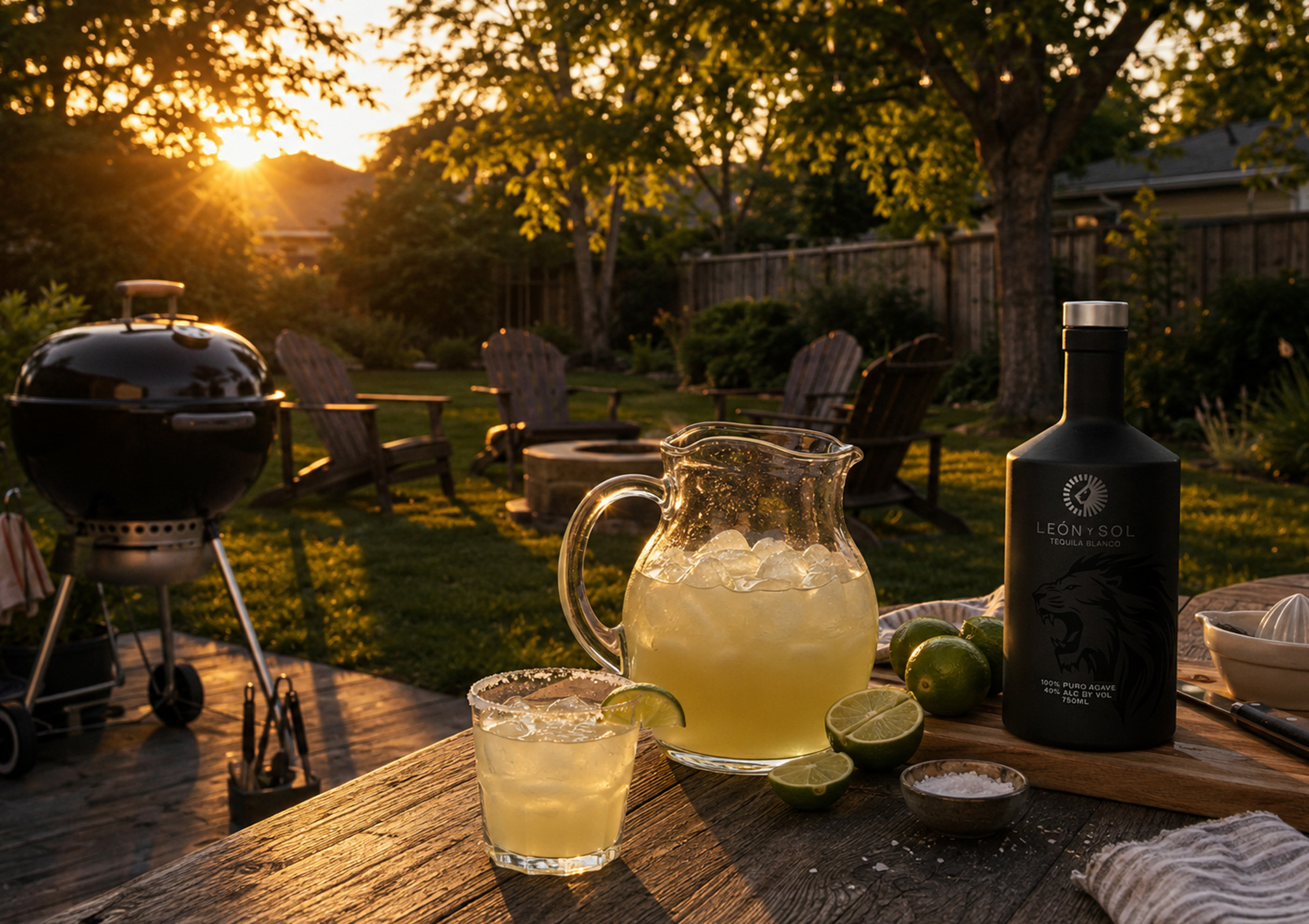
The agave in a bottle you open this year probably went into the ground around 2019. Next time you see a price gap between two tequilas on a shelf, those years explain a good part of it. Pour a glass of León Y Sol and taste what patient agave from Los Altos gives you.
Blue Weber agave takes six to ten years to mature enough for tequila. Most quality producers wait at least seven years so the plant can reach peak sugar, which gives the yeast more to turn into alcohol.
Yes. A 2021 study found that tequila from agave harvested at four years still passed Mexico's chemical standards. Younger plants carry less sugar, though, so producers get less alcohol from every kilo along with a different mix of aromatic compounds.
An average piña weighs about 70 pounds once the leaves come off. Traditional producers need roughly 7 kilos of agave per liter, so they get about six to eight bottles from a typical plant.
No. Jimadores cut the whole piña out, so each plant dies at harvest. Before that, the agave sends out hijuelos, small shoots around its base, which growers dig up and replant as the next generation.
Blue Weber agave grows slowly and needs six to ten years to reach harvest. Most of its early growth goes into the leaves, while the piña builds up sugar over the later years until a jimador decides it's ready.
A jimador is the field worker who harvests blue Weber agave by hand with a long bladed tool called a coa. Jimadores judge by eye when each plant is ready and can trim more than 100 plants in a single shift.