The Paloma is Mexico's most popular tequila cocktail and most Americans have never tried one. Here's what it is, where it came from, and how to make it right.
Most Americans discovered tequila through a margarita and never looked further. That’s a reasonable place to start and an unreasonable place to stop, because the drink Mexico actually enjoys on most occasions is simpler, less sweet, and much more refreshing.
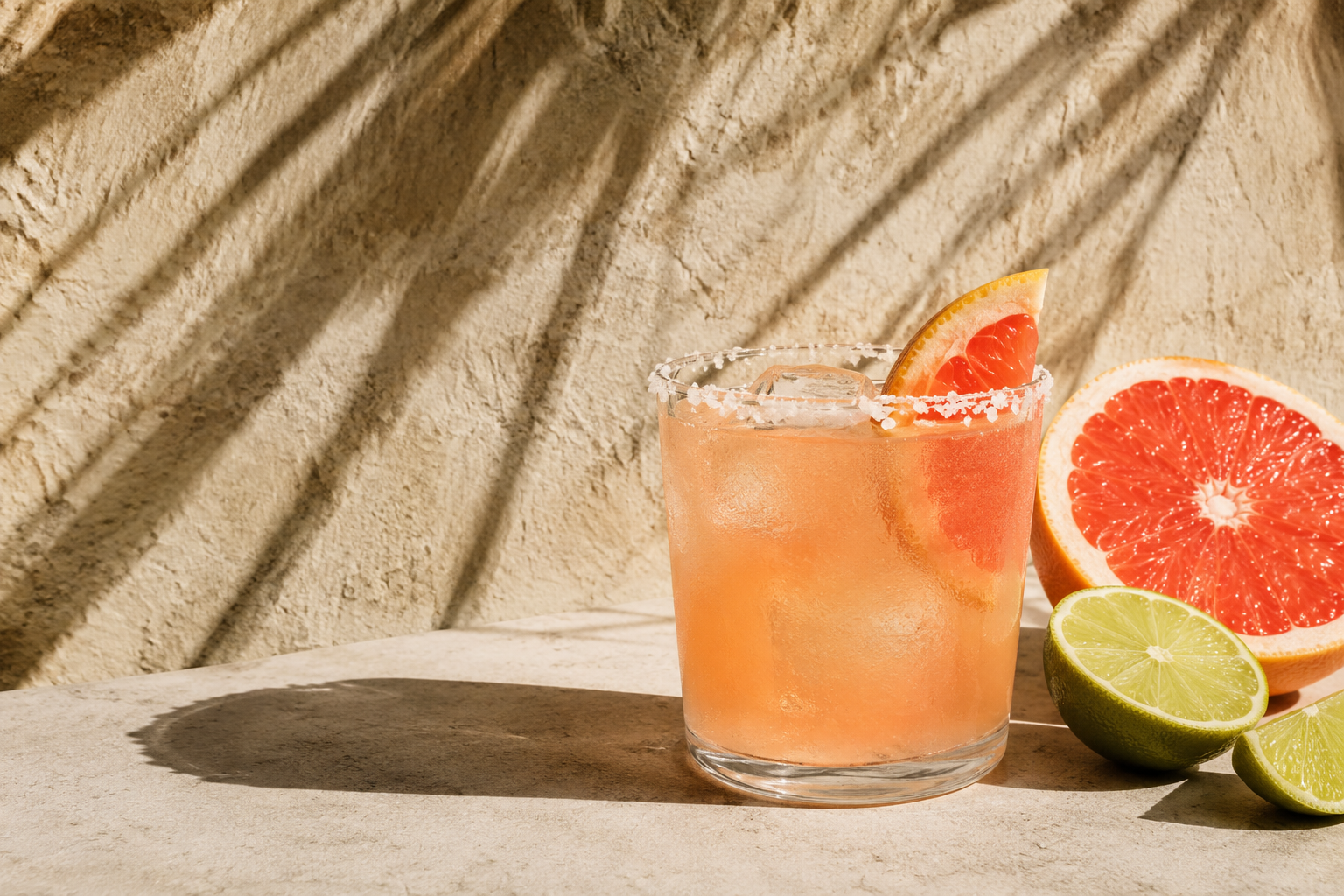
The Paloma is tequila, grapefruit, lime, and salt. No sweetener, no triple sec, no shaker required. It’s the most popular tequila cocktail in Mexico and the one most Americans have never heard of, which says something interesting about how a drink can be simultaneously obvious and overlooked.
Tequila and mezcal were the only spirits category to grow in the US in 2024, climbing to $6.7 billion while everything else declined. Most of that growth was due to the margarita. The Paloma is where tequila goes next.
This guide covers what a Paloma is, where it came from, how to make both versions, and why it belongs in your regular rotation along with whatever you’re already drinking.
A Paloma is a cocktail made with blanco tequila, grapefruit soda or fresh grapefruit juice, lime juice, and salt. It’s the most popular tequila cocktail in Mexico and one of the least known in the United States, which is one of the more confusing gaps in American drinking culture.
Palomas now appear on 7.7% of US restaurant menus, up 57% over the past four years, yet only 27% of Americans know what the drink is. Bartenders have been ahead of this for years. Grapefruit and tequila were always going to end up together, and the Paloma is what happens when you stop overthinking and just pour.
Almost half of American cocktail drinkers now prefer tequila as their base spirit, and many of them have only ever had it in a margarita. The Paloma is the most popular tequila cocktail they’ve never tried, and once they do, the margarita starts feeling like a rough draft.
The Paloma’s origin story is fully unresolved, which is either frustrating or fitting depending on how you feel about a drink this simple having a complicated past. The most repeated version credits Don Javier Delgado Corona, owner of La Capilla, the oldest bar in the town of Tequila. He’s a legitimate legend, credited with inventing the Batanga and other Mexican classics, so the attribution made sense. Then Jim Meehan’s Bartender Manual noted that Don Javier himself denied ever creating it. The mystery survived him when he passed away in 2020 at 96.
There’s also the Wikipedia version, where a certain Evan Harrison was cited as the Paloma’s inventor in a book called Popular Cocktails of the Rio Grande. Internet sleuths eventually discovered the book didn’t exist and Evan Harrison was a bartender who’d added the entry as a joke. By the time it was removed, dozens of blogs had already cited it as fact. Just the internet being the internet.
The most plausible explanation involves no single inventor at all. Squirt grapefruit soda arrived in Mexico in the 1950s and locals almost certainly started mixing it with tequila right away. The name may come from La Paloma, a beloved Mexican folk song from the 1860s. Or it might refer to the drink’s pale, dove-like color. Nobody agrees and nobody can prove it either way.
Tequila and grapefruit were always going to find each other. The combination is too obvious and too delicious to have required a single moment of invention. Whether Don Javier poured the first one, a rancher figured it out on their own, or Squirt’s marketing team deserves a raise, the drink would have existed regardless. Some combinations are inevitable.
A Paloma has four ingredients and no room to hide if any of them are wrong. Here's what goes into a proper one:
Blanco is the only call for a Paloma. Unaged, clean, agave-forward, bright enough to hold its own against grapefruit without fighting it. Reposado’s vanilla and caramel from oak aging push the drink somewhere it doesn’t need to go, softening the citrus edge that makes the Paloma work. Always 100% agave, always blanco, always something worth drinking on its own since a three-ingredient cocktail has nowhere to hide a mediocre base spirit.
León Y Sol blanco brings natural citrus and floral notes from Los Altos de Jalisco that amplify the grapefruit instead of competing with it. The highland agave does some of the cocktail’s work before you’ve added anything else.
This is where the Paloma splits into two legitimate versions. The traditional Mexican version uses grapefruit soda, specifically Squirt or Jarritos, poured straight into the glass with tequila and lime. Simple, fizzy, slightly sweet, and what most people in Mexico are actually drinking.
The cocktail bar version uses fresh-squeezed grapefruit juice with agave syrup and a topper of sparkling water. More complex, more citrus-forward, better when the grapefruit is good. Both are correct. The soda version is more traditional. The fresh version rewards the extra effort.
Neither is optional. The lime adds tartness that keeps the grapefruit sweetness in check and ties the whole thing together. The salt amplifies every other flavor in the glass and softens the bitterness of the grapefruit in a way that’s immediately obvious the first time you taste a Paloma with and without it. Rim the glass or add a pinch directly. Either works. Just don’t skip it.
This is the version people drink in Mexico. Grapefruit soda, not fresh juice, not a cocktail shaker, not agave syrup measured to the quarter ounce. Tequila, lime, salt, and Squirt or Jarritos over ice. The whole thing takes sixty seconds and tastes like it took considerably more than that.
León Y Sol blanco is the right tequila here. The highland agave brings natural citrus notes that work with the grapefruit soda rather than getting lost behind it.
Ingredients:
Instructions:
The fresh juice version is what you make when you want to show the Paloma what it’s capable of. More labor, more complexity, and noticeably better when the grapefruit is good and ripe. This is the cocktail bar version, and it’s worth the extra five minutes.
Ingredients:
Instructions:
In the US, the margarita wins by a mile. It outsells every other cocktail in American bars by a factor of four, with Q3 2024 sales up 25% year-over-year. That dominance is what’s kept the Paloma in the shadows for decades, and most Americans have no idea what they’ve been missing.
A margarita is a restaurant drink, something you order one or two of at a place that makes them properly, with fresh lime and good triple sec and a bartender who knows what they’re doing. A Paloma is a home drink, a house party drink, a Sunday afternoon drink. Tequila, grapefruit soda, lime, salt, and ice in whatever glass is closest. The simplicity is the whole point. You don’t need a cocktail shaker or a jigger or a bartender who cares. You just need the right five ingredients and five seconds of effort.
Americans are clearly open to new cocktails when the right one comes along. The mojito grew 37% and the espresso martini surged 116% in 2024. The Paloma is simpler than both, cheaper to make, and what people actually drink in Mexico. Tequila now commands 34.1% of cocktail base sales in American bars, ahead of vodka. The Paloma is the obvious next move for everyone already drinking tequila cocktails.
Here’s how they actually compare:
In a four-ingredient drink, the tequila is doing most of the work. The grapefruit soda handles the sweetness and the fizz, the lime handles the tartness, the salt handles the balance, and the tequila handles everything else. Which means what you pour matters more than most people think when they’re reaching for whatever’s on the back shelf.
Blanco is the only call. The clean agave character is what gives the Paloma its backbone, and oak aging from reposado or añejo softens exactly the edges you want to stay sharp. The citrus brightness, the agave punch, the way the drink wakes you up instead of settling you down. Blanco keeps all of that intact.
León Y Sol blanco is the right bottle for this. Highland agave from Los Altos de Jalisco brings natural citrus and floral notes that amplify the grapefruit without competing with it. Pour two ounces over ice, add lime and salt, top with Jarritos, and find out what a Paloma tastes like when the tequila is actually worth tasting.
The classic paloma doesn’t need to be improved. But if you’ve made enough of them and want to take it somewhere slightly different, these five variations stay true to what makes the drink great:
The margarita isn’t going anywhere. But if you’ve only ever had tequila that way, you’ve been missing the drink that Mexicans actually drink, and it’s been sitting right there the whole time.
A Paloma takes five minutes and four ingredients. Blanco tequila, grapefruit soda, fresh lime, salt. The combination is so obvious it probably would have invented itself eventually regardless of who got there first. That’s not a knock. That’s the highest compliment a cocktail can receive.
León Y Sol blanco is where to start. Pour two ounces, add lime, top with Jarritos, salt the rim, and find out what you’ve been missing. The margarita will still be there when you get back.
A Paloma tastes bright, bitter, and refreshing. The grapefruit brings a sweet-tart bitterness that tequila cuts through cleanly, and the lime adds a sharp citrus edge that keeps everything balanced. The salt amplifies all of it. It’s less sweet than a margarita and more complex than a vodka soda, with the agave character of the tequila coming through clearly because there’s nothing sugary masking it.
Paloma means “dove” in Spanish. The drink may have been named after a beloved Mexican folk song called La Paloma, written in the 1860s. Others suggest the name refers to the drink’s pale, dove-like color. The true origin is debated along with the drink’s invention, and nobody has settled either question definitively.
Yes. The Paloma is Mexico’s most popular tequila cocktail and is considered the national drink by many. While the margarita dominates in the US, the Paloma is what people actually order at bars and drink at home throughout Mexico, especially in Jalisco where tequila is produced.
A classic Paloma made with grapefruit soda comes in at roughly 150 calories. The tequila accounts for about 97 calories per 1.5 oz shot, the grapefruit soda addsa round 50, and the lime juice adds almost nothing. Use sugar-free grapefruit soda to cut the calories even further.
A Paloma uses grapefruit soda or juice instead of triple sec and orange liqueur, making it less sweet and more bitter than a margarita. The margarita is shaken and served over ice with lime and triple sec. The Paloma is built directly in the glass with grapefruit soda topping it off.